Spec-Driven Development vs Vibe Coding: When to Use Each

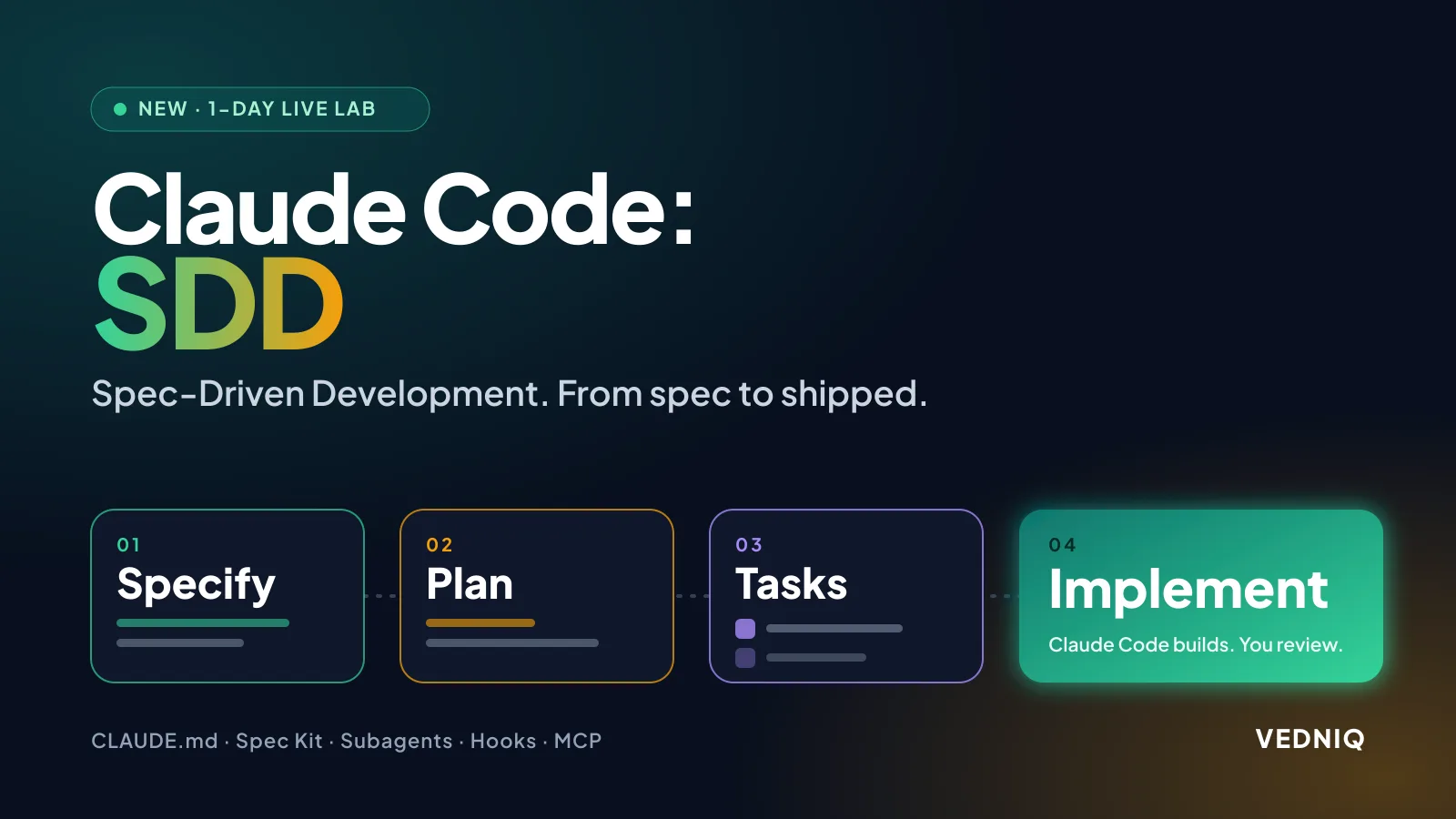
Vibe coding steers an AI assistant with ad hoc prompts and judges the result by reading the code. Spec-driven development writes intent, acceptance criteria and constraints down first and has the AI build and test against that spec. Vibe coding suits throwaway prototypes; SDD suits code you will keep, share and maintain.
What is the difference?
Both use an AI assistant. The difference is where intent lives. In vibe coding it lives in a chat and in the developer's head, and the code is the first place it becomes concrete. In SDD it lives in a reviewed spec, and the code is checked against it. That single change affects review, onboarding, rework and how well the work scales across a team.
How do they compare side by side?
| Vibe coding | Spec-driven development | |
|---|---|---|
| Source of truth | Chat history and generated code | A written spec with acceptance criteria |
| Speed to first result | Very fast | Slower up front |
| Review | Read the diff and judge by feel | Verify against the spec and tests |
| Rework | Often discovered late | Ambiguity found before coding |
| Team use | Hard to repeat or hand over | Shared, versioned artifacts |
| Best for | Prototypes, spikes, personal tools | Production features, regulated or shared code |
When does vibe coding win?
- You are exploring an idea and do not yet know what you want.
- The code is disposable: a one-off script, a demo, a spike.
- One person owns it end to end and nobody else will maintain it.
When does spec-driven development win?
- Several people (or roles) must agree on what is being built, such as BAs, testers and developers.
- The code will be maintained, audited or extended.
- Mistakes are expensive: payments, security, compliance, data handling.
- You want tests and traceability that follow from requirements.
How do you move a team from one to the other?
- Start with one feature, not the whole backlog.
- Write a short project constitution and keep it in
CLAUDE.mdso every session follows the same rules. - Spec before code: user stories, acceptance criteria, open questions. Resolve the questions.
- Review the spec, then the plan, then the code. Three small reviews beat one large one.
- Trace tests to acceptance criteria so a failing test points at a requirement.
- Measure rework and review time before and after, so the change earns its place.
Frequently asked questions
Is vibe coding bad?
No. It is a good fit for prototypes and exploration. The risk is carrying prototype habits into production code where intent, review and traceability matter.
Does SDD slow developers down?
It adds time up front for the spec and clarification. Teams adopt it because it can reduce rework and review churn later. Measure it on your own work rather than assuming either result.
Can I mix both?
Yes. Explore with vibe coding, then write the spec for what you decided to keep and rebuild it properly.
Sources: Spec Kit: What is spec-driven development?, Thoughtworks Technology Radar, Claude Code: CLAUDE.md and memory.
Keep reading: What is spec-driven development? · Claude Code for QA engineers
Train your team on this
VEDNIQ runs live, 1-day Claude Code programs for delivery teams, with hands-on labs.